Native Hedging Plants
11th Jan 2026
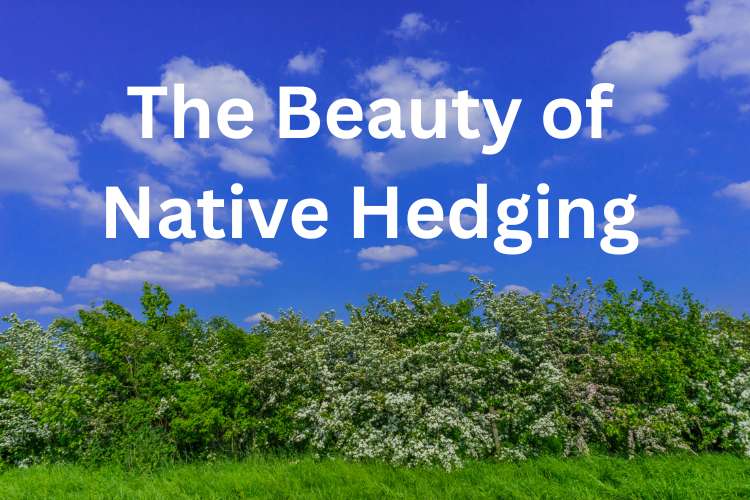
Id there is anything which differentiates the British countryside from any other it’s the wonderful way fields and roads are criss-crossed and defined by hedging. Hedges of all different types, colours, and hues. not just something tall and green, but a living, breathing, wildlife-friendly mixture of flowers, berries, and branches that looks right at home alongside our country lanes, fields, and gardens. There really isn’t anything our countryside and it’s the hedging which makes the British landscape so unique.
That’s the beauty of our native hedging plants. They’ve evolved here. They’re perfectly adapted to our unpredictable weather, our soil, our wildlife, and even our gardening habits (or lack of them, if you’re anything like me). If you want a hedge that thrives on being left alone, blends beautifully into any garden, and supports birds, bees, butterflies and everything in between, planting native hedging is the way to go.
Let’s explore why native hedging deserves a place in your garden, the best species to plant, and how these easy-to-care-for hedges can transform your garden into a mini nature reserve (so to speak) without looking like a jungle.
Why Choose Native Hedging?
Native hedging plants aren’t just “nice to have.” They offer a whole range of benefits that exotic or non-native species simply can’t match.
They’re so resilient
Well they have to be don’t they? British native hedging have been putting up with our unreliable weather for thousands of years. Torrential rain? No problem. Frost? They shrug it off. Heatwave? Well… they tolerate that too on the rare occasions the sun actually makes an appearance.
In a nutshell, they’re hardy, tough, and brilliant for gardeners who want something low-effort but high-impact.
They’ll feed your ecosystem
Looking after wildlife doesn’t have to mean letting the garden go wild. Native hedges provide structure and food:
- Blossom for bees
- Berries for birds
- Shelter for small mammals
- Thorny protection for nesting
Think of a native hedge as your garden’s own tiny nature reserve (sounds a bit grandiose but you know what I mean).
They suit every style of garden
Country cottage? Check. Contemporary suburban semi? Perfect. New build? Absolutely. Native hedging blends in anywhere.
They’re low-maintenance
You can trim them once a year. Twice if you’re feeling energetic. That’s it.
If you want something beautiful that won’t take all your time, native hedging is the answer.
Top Native Hedging Plants
(All Available at Direct Hedging Plants)
Don’t worry if you’re not too sure which hedging would be best for you. Here are the very best plants which are stocked on the Direct Hedging Plants website, each one with its own character, benefits, and reasons to plant it.
Hawthorn (Crataegus monogyna)
There’s no plant which is more quintessentially British than hawthorn. You’ll see miles and miles of it lining our country roads and fields. It’s tough, fast-growing, and practically indestructible. Which makes it perfect for any gardener and garden.
Why plant it?
Because it’s brilliant. In spring, hawthorn bursts into clouds of scented white blossom that look spectacular and feed early-season pollinators. In autumn, it’s dripping with bright red berries that are loved by birds.
Growth rate: Fast
Maintenance: One trim a year
Best for: Wildlife gardens, boundary hedges, country-style planting
Blackthorn (Prunus spinosa)
Blackthorn is another favourite. Famous for producing sloes, the berries used to make sloe gin, it’s also a magnet for wildlife.
Why plant it?
It flowers before the leaves appear, giving a beautiful wash of white blossom in early spring. The thorny structure provides nesting protection for birds.
Growth rate: Medium
Best for: Natural screens, wildlife shelter, rural gardens
Hazel (Corylus avellana)
Hazel is a great all year round plant. In late winter, its long yellow catkins appear, followed by edible nuts later in the year.
Why plant it?
Because it’s a food source for everything. From squirrels to birds. And those catkins are a beautifully subtle winter feature.
Growth rate: Medium-fast
Best for: Mixed hedging, edible gardens, wildlife corridors
Dog Rose (Rosa canina)
The dog rose adds a countryside feel to the garden. It scrambles beautifully through other plants and gives soft pink wild roses in summer.
Why plant it?
The hips! Those bright red rosehips in autumn are packed with vitamin C and adored by birds. They also look amazing in the low winter sun.
Growth rate: Medium
Best for: Flowering native hedges, informal gardens, wildlife-friendly spaces
Field Maple (Acer campestre)
A small native tree that works beautifully in hedging mixes, field maple adds golden autumn colour and helps build a full, dense structure.
Why plant it?
Because it brings seasonal interest. The leaves turn rich buttery yellows in autumn which is something few hedging species can match.
Growth rate: Medium
Best for: Colour, structure, mixed hedges
Hornbeam (Carpinus betulus)
Hornbeam often gets grouped with native mixes, but it’s a terrific plant on its own.
Why plant it?
It’s incredibly hardy and tolerates more clay and damp than beech. It holds onto many of its coppery leaves through winter, giving year-round screening. This is a rare trait in a deciduous hedge.
Growth rate: Steady but not slow
Best for: Boundary hedges, shade, long-term low-maintenance privacy
Why Mixed Native Hedging Is Often the Best Choice
Direct Hedging Plants offers a Mixed Native Hedging pack and honestly, it’s one of the best options if you want:
- Seasonal interest
- Better biodiversity
- Stronger hedges
- A more natural look
- More disease resistance
A mixed hedge behaves like a miniature woodland and wildlife goes, well, wild for it.
It also looks beautiful. You get hawthorn blossom, dog rose flowers, autumn berries, catkins, late colour, and winter structure all in one hedge.
What a Native Hedge Looks Like Through the Year
Spring
Fresh green leaves, white blossom from hawthorn and blackthorn, and catkins from hazel.
Summer
Thick, lush growth that creates a brilliant privacy screen. Dog rose flowers add colour.
Autumn
Berries everywhere, rosehips, haws, sloes, plus autumn gold from field maple.
Winter
Bare branches with structure (or coppery hornbeam leaves), perfect for wildlife shelter.
It’s basically a year-long story unfolding right outside your window.
How to Choose the Right Native Hedge
- For maximum wildlife: Hawthorn, dog rose, blackthorn
- For no-nonsense reliability: Hawthorn or hornbeam
- For blossom: Blackthorn or dog rose
- For autumn colour: Field maple
- For traditional country look: Mixed native hedging
- For edible interest: Hazel (nuts), blackthorn (sloes), dog rose (hips)
And if you live in a rural or semi-rural area, a native hedge often looks more appropriate than an evergreen.
FAQs About Native Hedging Plants
Do native hedges grow quickly?
Some do! Hawthorn is fast. Blackthorn is medium. Hazel and field maple are steady growers.
Are native hedges good for small gardens?
Yes. Especially if trimmed annually. Mixed native hedging can be kept compact.
Do native hedges lose their leaves?
Most do, but hornbeam hangs onto many of its leaves through winter, giving great screening.
Will a native hedge attract wildlife?
Yes, massively. Bees, butterflies, birds, small mammals, beneficial insects.
How often should I trim a native hedge?
Once a year is enough. Twice if you want a very neat shape.
Final Thoughts: Bring the Countryside Into Your Garden
Native hedging plants offer something few other hedges can: a link to the landscape we grew up with. They bring blossom, berries, autumn colour, wildlife, structure, privacy — and they do it all with almost no fuss.
If you want a garden that feels alive, natural, and beautifully British, a native hedge is the perfect choice.
Ready to plant your own wildlife-friendly hedge?
Browse the full range of Mixed Native Hedging and individual native species at Direct Hedging Plants.
And if you want help comparing native vs evergreen vs fast-growing options, don’t miss the full Ultimate Guide to Garden Hedging Plants.